
First-Year Foundations@Innis
FYF@Innis Seminars
For 2023-2024 there are 13 FYF@Innis seminars, each at a credit weight of 0.5 FCEs. All are taught by leading professors who are dedicated to engaging and supporting first-year Innis students.
Browse through the course listings to see what you’re interested in, and then visit the individual seminar pages for more information.
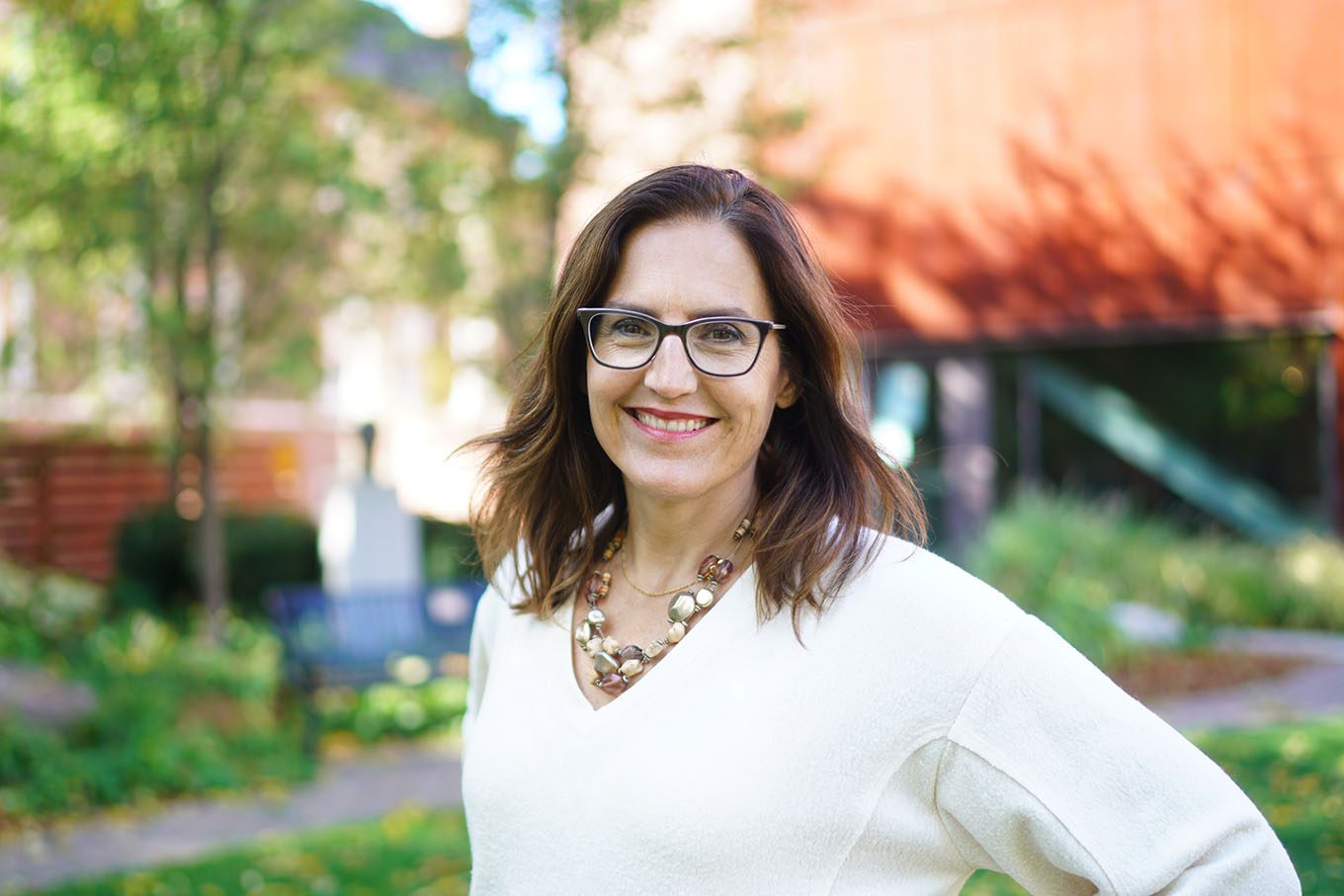
Professor: Hang-Sun Kim
Course Code: GER195H1F
Cities have been described as places of desire and places of fear. They pulse with life, bringing together people from different class, gender, and ethnic backgrounds, simultaneously giving rise to a sense of freedom and oppression, a sense of belonging and alienation. This course will explore the city as a physical reality that shapes our lives, but is also a projection of our deepest imaginings. Through readings of philosophical and sociological texts by influential theorists of the city, we will consider various ancient and modern conceptions of urban space and subjectivity.
Professor: Regina Rotman
Course Code: MAT198H1F
How do we send our own confidential information through secure channels, and how can we break codes to uncover the secret information of our adversaries? The mathematical field of cryptology is dedicated to answering such questions. In this course we will study breakthroughs in cryptology, from secret messages in the ancient world and the Enigma cipher in World War II, to modern cryptosystems that facilitate online commerce.
Professor: Sarah Gallant
Course Code: RLG198H1S
This course will examine the “what ifs” and imagined worlds of ideal utopias and oppressive dystopias through the lens of religion and gender in Margaret Atwood’s The Handmaid’s Tale and Charlotte Perkins Gilman’s Herland. Because science fiction and utopian/dystopian literature expresses what an author sees as possible or hopes is possible, but also fears is possible, we will consider science fiction as a political and social critique.
Professor: Andrea Williams
Course Code: INI196H1F
From environmental disasters and ecological collapse to climate change denial and celebrations of nature and wilderness, we will explore the diverse ways humans imagine and write about the natural world and the consequences of such writing. We will study a variety of nonfiction texts, images, and videos about ecology, the environment, nature, wilderness, and sustainability as we consider what these terms mean.
Professor: Harvey Nicholson Jr.
Course Code: SOC198H1F
Emphasizing sociological perspectives, this course highlights and presents explanations for ongoing racialized inequalities across various social institutions, in opportunities for advancement, and in everyday social interactions.
Professor: Chris Johnson
Course Code: HIS190H1F
This first-year seminar explores radical traditions of education beyond and in resistance to formal schooling. Transnational in scope—and journeying from the late nineteenth century to the present day—we will study the pedagogical innovations and grassroots struggles of anarchic youth, guerrilla intellectuals, and feminist revolutionaries who used education broadly, and historical inquiry in particular, as tools for empowerment and collective liberation.
Professor: Maurice Ringuette
Course Code: CSB196H1S
With the completion of the human genome sequence, we now have access to more information than ever before about our genetic make-up. This course addresses topics such as what genes are, how they are identified, and how knowledge about genes impacts society.
Professor: Rachel Silvey
Course Code: GGR198H1F
This course examines the political geographies of transnational migration. It asks how spaces of migration and mobility are political, and how migration politics are tied to inequalities wrought through intersecting histories of race, class, and gender. It seeks to extend our understandings of migrants, borders, and mobility, and it explores the processes through which mobility is produced, delimited and structured.
Professor: Jessie Yeung
Course Code: STA198H1S
This course examines the meaning and mathematics of probabilities, and how they arise in our everyday lives. Specific topics may include: the nature of coincidences, the concept of luck, games involving dice and cards, long run averages in casinos, margins of error in polls, the interpretation of medical studies, crime statistics, decision making, pseudorandomness, and Monte Carlo algorithms.
Professor: Nic Sammond
Course Code: CIN197H1S
This first-year foundation course is a survey of sound film (with a brief selection of silent shorts) on the topic of how popular cinemas have represented going to school. Looking at one film and one scholarly text a week, the course will offer an introduction to the close reading of film texts, reading and writing film criticism, and the fundamentals of film history.
Professor: Elizabeth Legge
Course Code: FAH198H1F
Art causes scandals for many reasons, provoking a range of consequences, including censorship, cuts to government funding of the arts or even destruction of the work in question. In this course we will consider a number of kinds of art scandal arising from exhibition in public galleries and urban spaces.
Professor: Jessica Sommerville
Course Code: PSY195H1S
This course will use an interdisciplinary perspective to explore how the infant mind emerges and grows. Topics could include how brain plasticity influences “critical” or “sensitive” periods for learning, or how studying infants’ perception, cognition and behaviour can offer us critical insights into long-standing philosophical questions.
Professor: Thom Dancer
Course Code: ENG197H1F
From H.G. Wells to Star Trek to Bill and Ted's Excellent Adventure, tales of time travelers remain captivating. What does our fascination with time travel tell us about storytelling and narrative? This course will explore the questions that time travel raises about narrative as well as history, temporality, subjectivity, and agency. We will look at examples of time travel in film, television, and books as well as philosophical and scientific writing about it.
Have a question?
Need more info about FYF@Innis seminars? Not sure which courses are right for you? We can help. Contact our program coordinator, Jannie Chien.